
The keys
nuevo
Generated with AI
nuevo
Generated with AI
“Before we had to listen to hours of sermons about who conquered who in the past. Now the military is sitting down and very specific issues are being discussed: withdrawal mechanisms, guarantees, deadlines and so on,” he told the newspaper. Pravda a knowledgeable source the talks between Russians and Ukrainians in Abu Dhabi, which attributed the progress to the presence at the dialogue table of Kirilo Budánovthe former spy chief, in charge of piloting negotiations with the Kremlin.
But the Secretary of State, Marco Rubioacknowledged this Wednesday that the peace process will be long. “If you look at the list of outstanding issues that existed at this time last year and the list of issues that are still open now in terms of reaching a peace agreement between Ukraine and Russia, that list has been substantially reduced,” he said. “That’s the good news. The bad news is that the issues that remain are the most difficult.”
The exchange of territories is still pending resolution. The transfer to Russia of the Donbas, a border region whose troops have not even been able to conquer in its entirety after almost four years of war, is the main obstacle.
According to a recent survey by the kyiv International Institute of Sociology (KIIS), 52% of Ukrainians consider it unacceptable to hand over the Donetsk and Lugansk regions, while 40% say they are willing to take the step as long as the war ends.
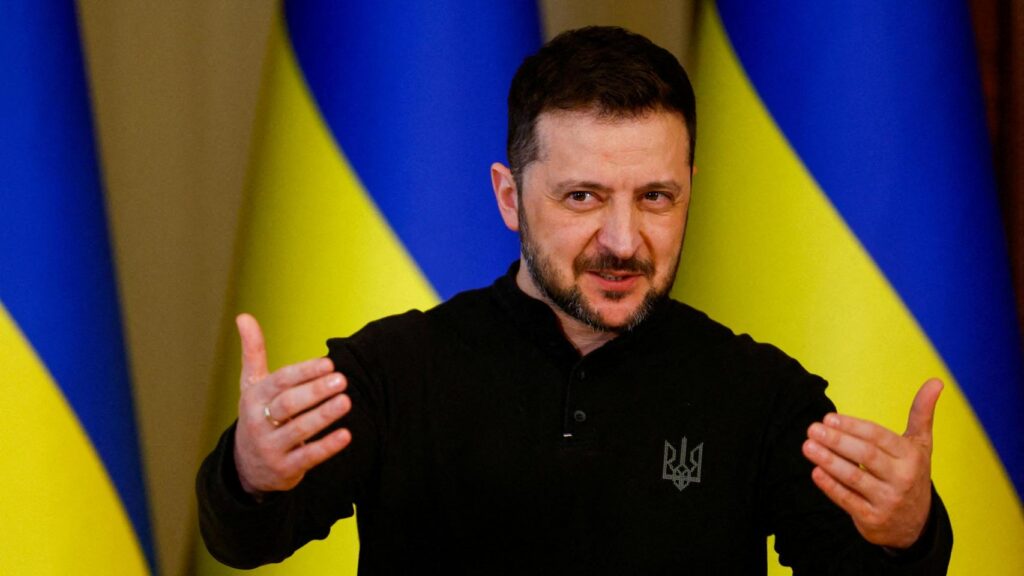
Volodímir Zelenski will not reach any agreement on Donbas until meeting face to face with Vladimir Putin. “Russia would need at least two years to take over Donbas and would not resist that long,” stressed the Ukrainian president, who estimates that the military campaign would cost the lives of 800,000 Russian soldiers.
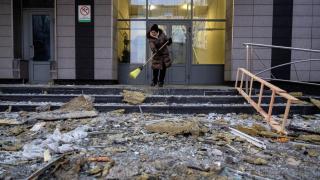
Meanwhile, the parties remain meeting behind closed doors in Abu Dhabi. The second round of dialogue, which began on Wednesday and will continue this Thursday, seeks to take “concrete steps” and find “practical solutions”, according to the secretary of the National Security and Defense Council of Ukraine, Rustem Umerovwhich described the first day of talks as “substantive and productive,” without going into detail about the issues discussed.
“Everything is very secret,” he points out in conversation with this newspaper Oleg Ignatovanalyst at the International Crisis Group. “The parties are not disclosing the content of the negotiations, and their scarce public assessments could be very far from what is really happening at the table.”
An example of the change in the Kremlin’s negotiating stance is the renewal of the Russian delegation, which has gone from being led by the president of the Interdepartmental Commission for Historical Education of Russia, Vladimir Medinskyto be for Igor Kostyukovthe head of Russian military intelligence, the feared GRU.
“However, judging by what is happening around the negotiations, there is so far no evidence that the positions of Russia and Ukraine on the key issues have changed in any way,” Ignatov underlines. “Surprises and compromises are always possible, but I think for now all parties are trying to achieve their goals.”
The presence of the United States, willing to offer security guarantees to Ukraine, also shows that the talks are serious. Donald Trump’s special envoy, Steve Witkoffand the president’s son-in-law, Jared Kushneryou are not alone in Abu Dhabi.
They accompany them Josh GruenbaumWhite House advisor and commissioner of the Federal Acquisition Service; Daniel DriscollSecretary of the United States Army; and the general Alex GrynkewichNATO Supreme Allied Commander since July last year.
“The good news is that, for the first time in a long time, we have technical military teams from Ukraine and Russia meeting in a forum in which we will also participate with our experts,” Rubio noted. “I don’t want to say that conversations alone are progress, but it’s good that there is participation.”
Putin maintains his maximalist demands, and does not take his foot off the accelerator, as he demonstrated on Monday by breaking the energy truce requested by Trump with a wave of drone and missile attacks on Ukrainian facilities. A low blow that the tenant of the White House did not even condemn because, as he said, the partial ceasefire had expired on Sunday and Putin had “kept his word.”
Kremlin spokesman Dmitri Peskovassured this Wednesday that Russian troops will continue fighting in Ukraine until kyiv makes “decisions” that satisfy Moscow.
Without intending to, the Secretary General of NATO, Mark Rutteused similar language during his speech to the Ukrainian Parliament, where he acknowledged that Zelensky would have to make “difficult decisions” to seal a peace agreement.
But the Kremlin does not soften its attacks on Zelensky either. Russian Foreign Minister Sergei Lavrovdeclared this Wednesday that the Ukrainian president does not want the war to end because to take this step he would have to give up Donbas, and that, according to the logic of the head of Russian diplomacy, would end his political career.
For now, Zelensky is closing in. He considers that freezing the front line would already be a significant concession on the part of kyiv.
Last night, Zelensky called for the peace process in Abu Dhabi to be noticed. “People in Ukraine must perceive that the situation is truly moving towards peace and the end of the war, and not towards Russia taking advantage of everything for its benefit and continuing the attacks,” claimed the Ukrainian leader in his usual nightly speech, in which he also anticipated a new exchange of prisoners of war, which would be the first in the last four months.
You may also like
-
the family nucleus that supports Joe Biden after announcing his cancer
-
Trump’s immigration policy and the increasing powers of ICE “undermine” US democracy, HRW denounces
-
Mbappé, with a penalty in the 99th minute, avoids a new calamity for Madrid under the Bernabéu whistles
-
The mystery of Carvajal: between his desire and the doctors’ caution
-
Alex Saab, former minister close to Maduro, detained in an FBI operation together with the government of Delcy Rodríguez