
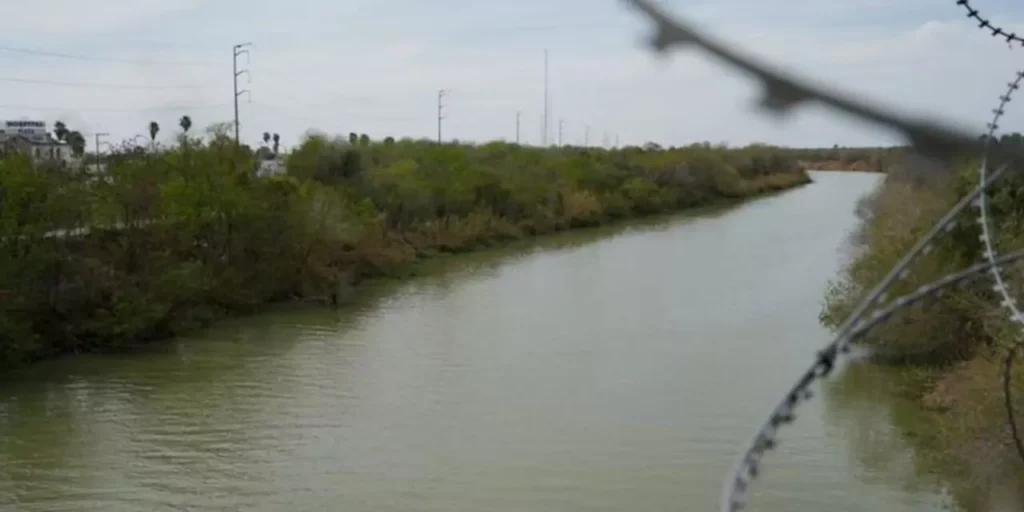
Mexico and the United States reached a technical agreement for water management in the Rio Grande basin, framed in the 1944 Water Treaty, in a context of extreme drought that has increased pressure on border communities, farmers and ecosystems.
The understanding is the result of months of technical and political negotiations. And its objective is to guarantee compliance with the international treaty without violating the human right to water and food.
According to a joint statement from the ministries of Foreign Affairs, Agriculture, Environment and the National Water Commission (Conagua), Mexico ratified its commitment to make minimum annual deliveries in accordance with the hydrological conditions of the basin and the mechanisms provided for in the 1944 agreement.
WATER CERTAINTY AND ACCUMULATED DEBT
The new agreement establishes that Mexico will deliver at least 350 thousand acre-feet of water per year, equivalent to 431.7 million cubic meters, during the next five-year cycle. In parallel, a technical plan will be implemented to pay off the debt accumulated from the previous period.
The central objective is to avoid new deficits in five-year cycles and provide greater certainty to the management of the resource in a scenario marked by prolonged scarcity.
FEDERAL COORDINATION AND NORTHERN STATES
President Claudia Sheinbaum reported that the agreement was built in coordination with the governors of the northern states of the country, under a “minimal impact” scheme that allows international commitments to be met without compromising domestic supply.
Chihuahua, Coahuila, Tamaulipas, Nuevo León and Sonora are among the entities involved, all highly dependent on the water of the Rio Grande for human consumption, agriculture and productive activities.
The agreed plan includes monthly monitoring meetings, more orderly management of the resource and long-term planning actions that contemplate infrastructure, adaptation to climate change and a more predictable distribution of water.
UNITED STATES VISION
From Washington, US authorities indicated that the agreement strengthens the water security of southern Texas. Secretary of State Marco Rubio and Secretary of Agriculture Brooke L. Rollins called the agreement a victory for farmers and ranchers in the Lower Rio Grande Valley.
A MULTIFACTORIAL CRISIS IN THE RIO BRAVO
Beyond the agreement, the Rio Grande faces a structural crisis. The lack of rain has caused critical levels in key dams such as La Amistad and Falcón. While agricultural overexploitation and population growth exceed the natural availability of the resource.
Added to this is pollution from wastewater discharges, pesticides, heavy metals and domestic waste. In some areas, the river level has dropped to less than 30 centimeters, below the operating minimum.
Environmental deterioration is combined with social and humanitarian risks. Since the river has become one of the most dangerous routes for irregular migration, aggravated by the installation of physical barriers.
SOCIAL, ECONOMIC AND ENVIRONMENTAL IMPACTS
Water scarcity already generates visible consequences: economic losses in the agricultural and livestock sector. As well as increased social and political tensions over the distribution of the resource, and greater vulnerability for the populations that depend on the river.
The new agreement seeks to contain these immediate effects, although specialists warn that, without a comprehensive and sustained strategy, the Rio Grande water crisis will continue to be a factor of regional instability.
You may also like
-
Aeroméxico is once again the most punctual airline in the world in 2025, according to Cirium
-
Spain and Greece join the global offensive: They will prohibit social networks for minors
-
Ben Affleck arrives at the hospital with a broken hip and obvious signs of malnutrition
-
Disney prepares movie about Hulk and his battle against toxic masculinity
-
People who criticized the end of Game of Thrones, those who watched House of the Dragon the most